One thing sharp
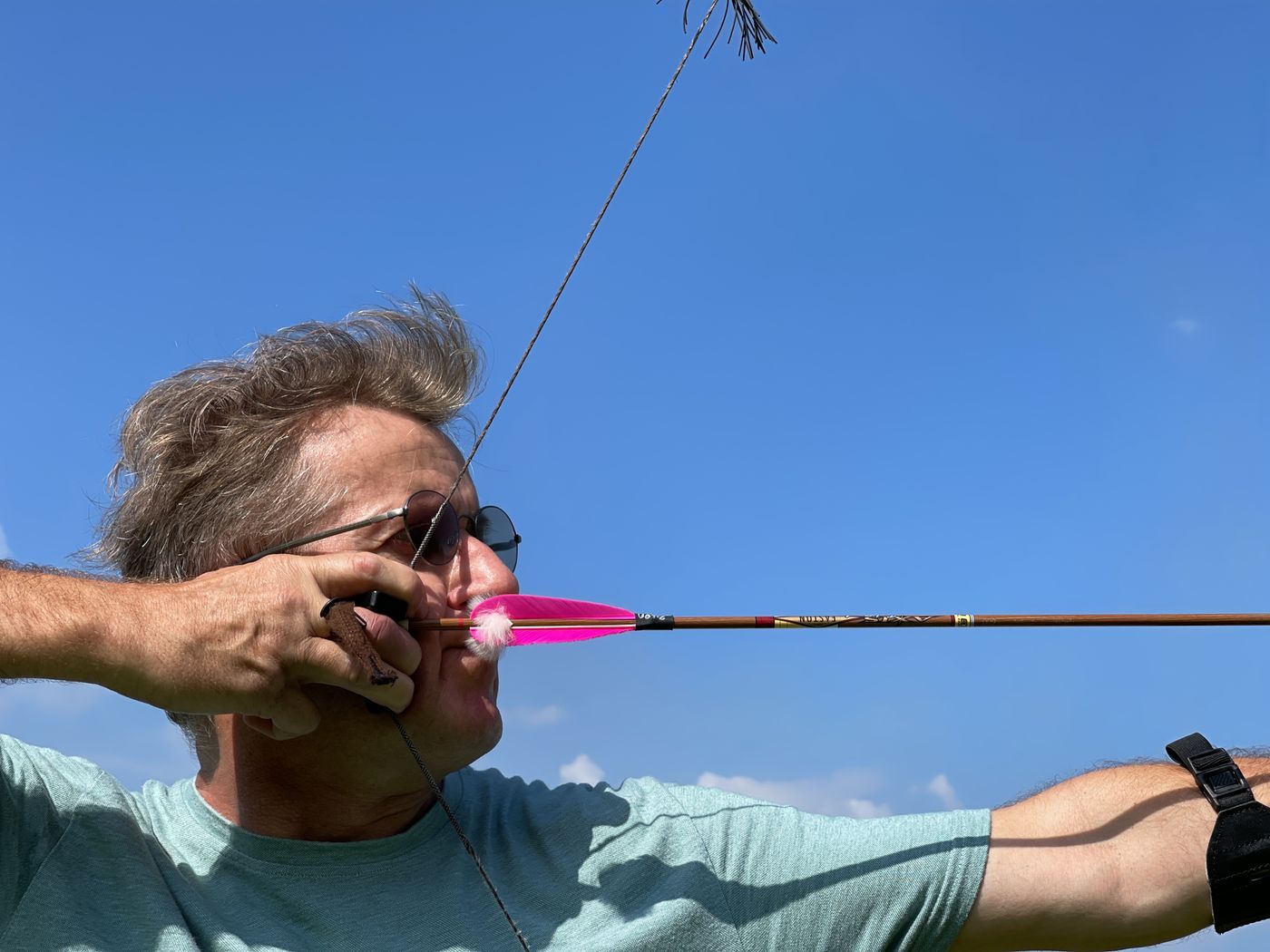
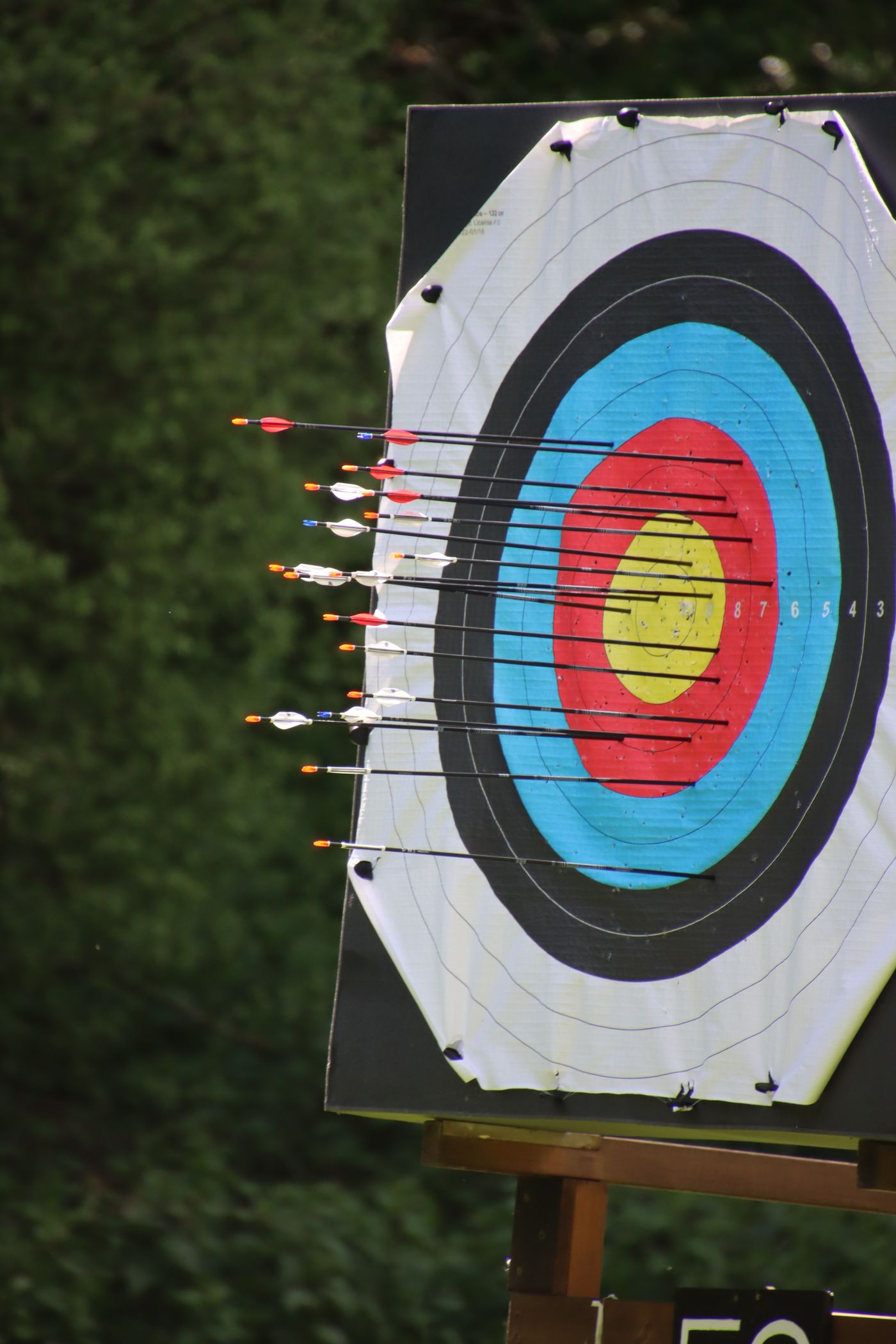
Your eye has one focal plane. It can hold the sight ring or it can hold the gold, and it cannot hold both — which is the whole reason any of this kit exists. Move your cursor up and down the hero and watch the sharpness change hands.
The Week
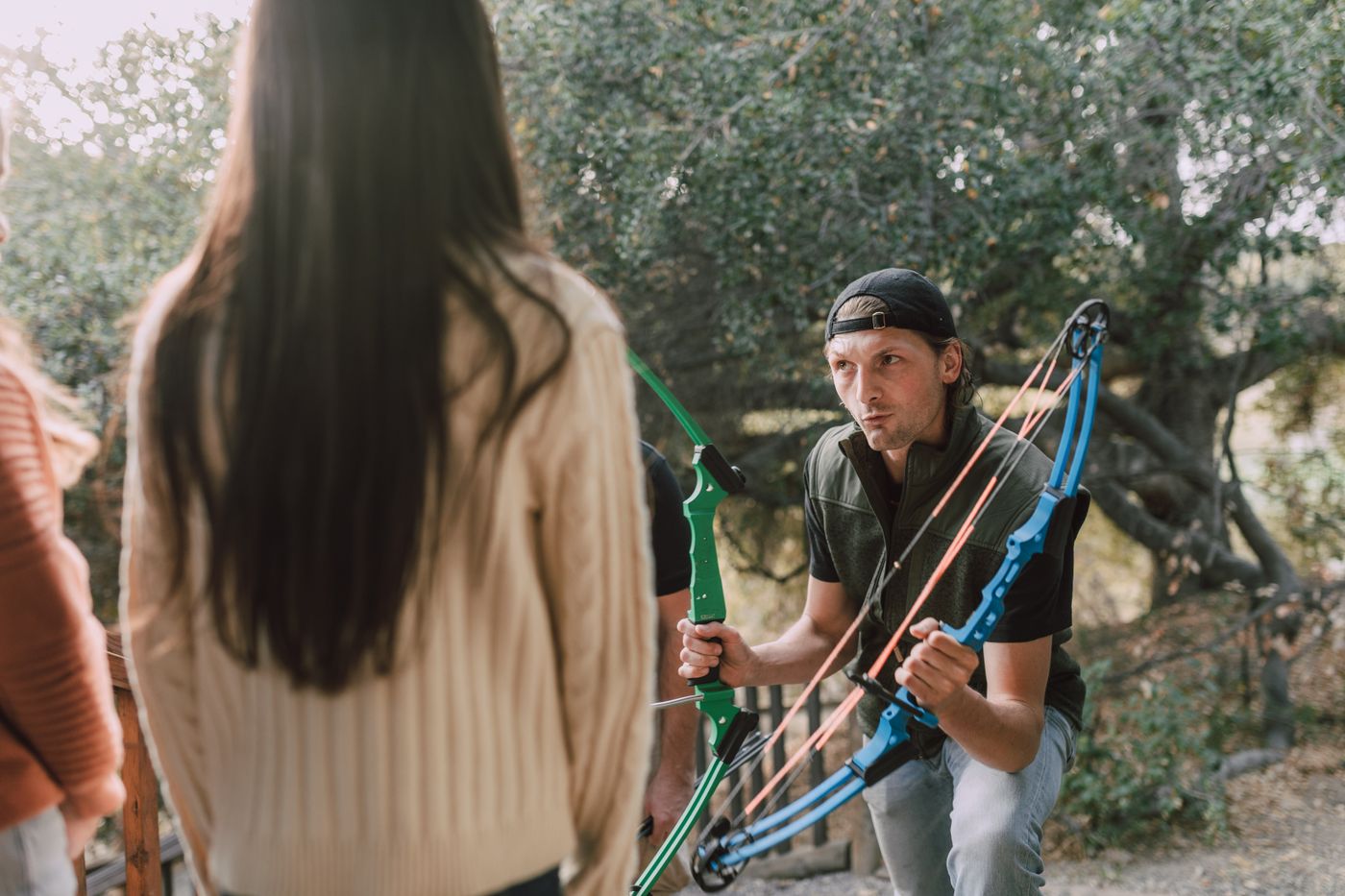
Most of what happens at Ashnock happens on the grass behind the shop, and the grass runs to a timetable. Here is the whole of it at once — what runs when, how many places are on each line, and how many of them have already gone. Pick one and the line below draws itself the way it will actually be laid out: four to a boss, the boss at the size the face really is, and your place on it. Where each session sits on the ground, and what the distance does to the shot, is further down the page.
The line — from above, four places to a boss
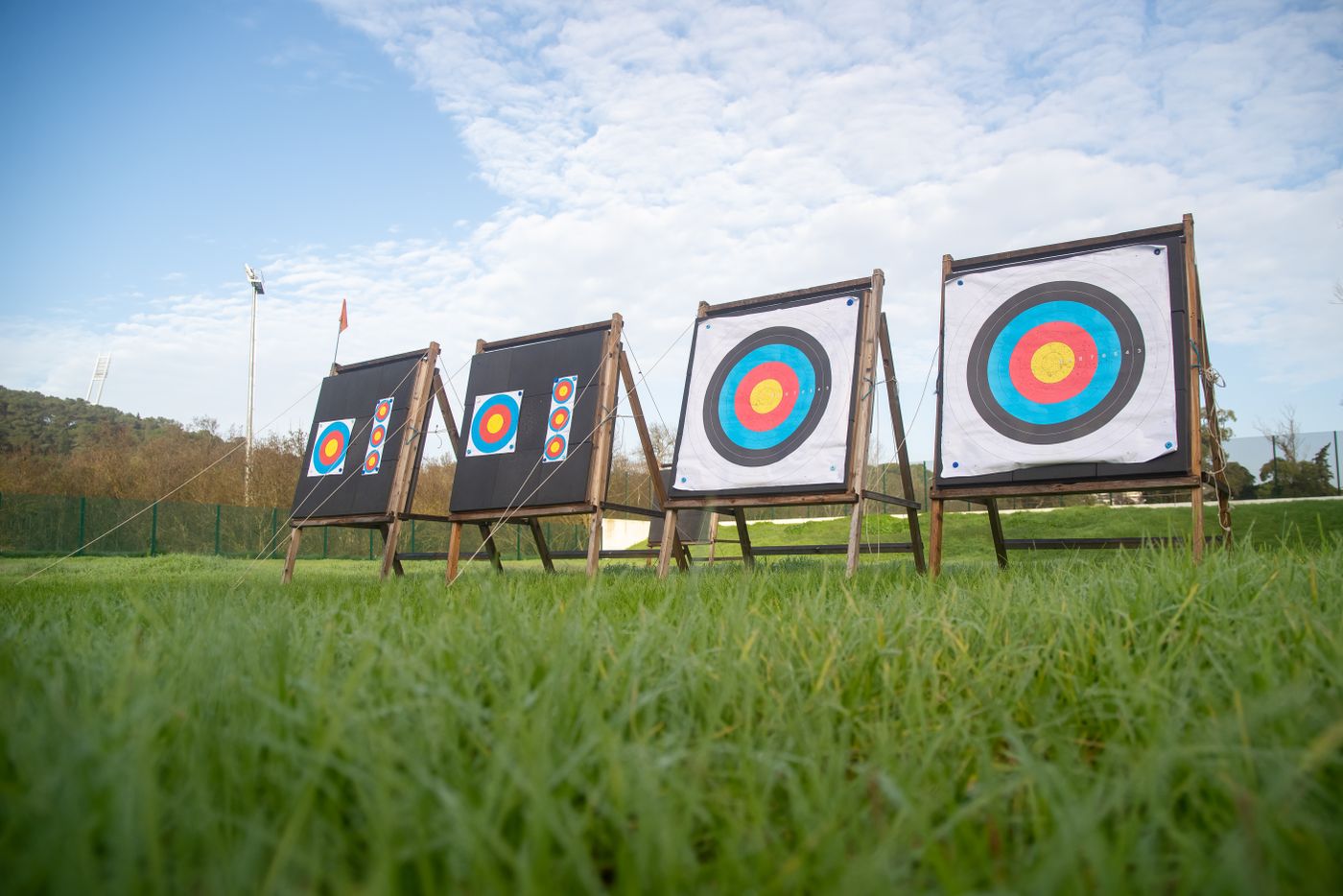
Four places to a boss, which is how a line is actually laid out — so six on the line is two bosses with the second one half used, and the drawing works that out rather than being told it. The bosses are drawn at the size the face really is, so a sixty standing next to a hundred and twenty-two is genuinely half the width of it; the plan further down does the opposite and draws each one at the size it looks from the shooting line, which is why the same butt is a different size in the two pictures and both are right. Who is already on a given line is a fixed function of that slot rather than a live count, so the same Saturday always looks the same, and the places left are counted off the drawing rather than written into it.
—
—

Nothing matches that
Nothing in this department matches your search.
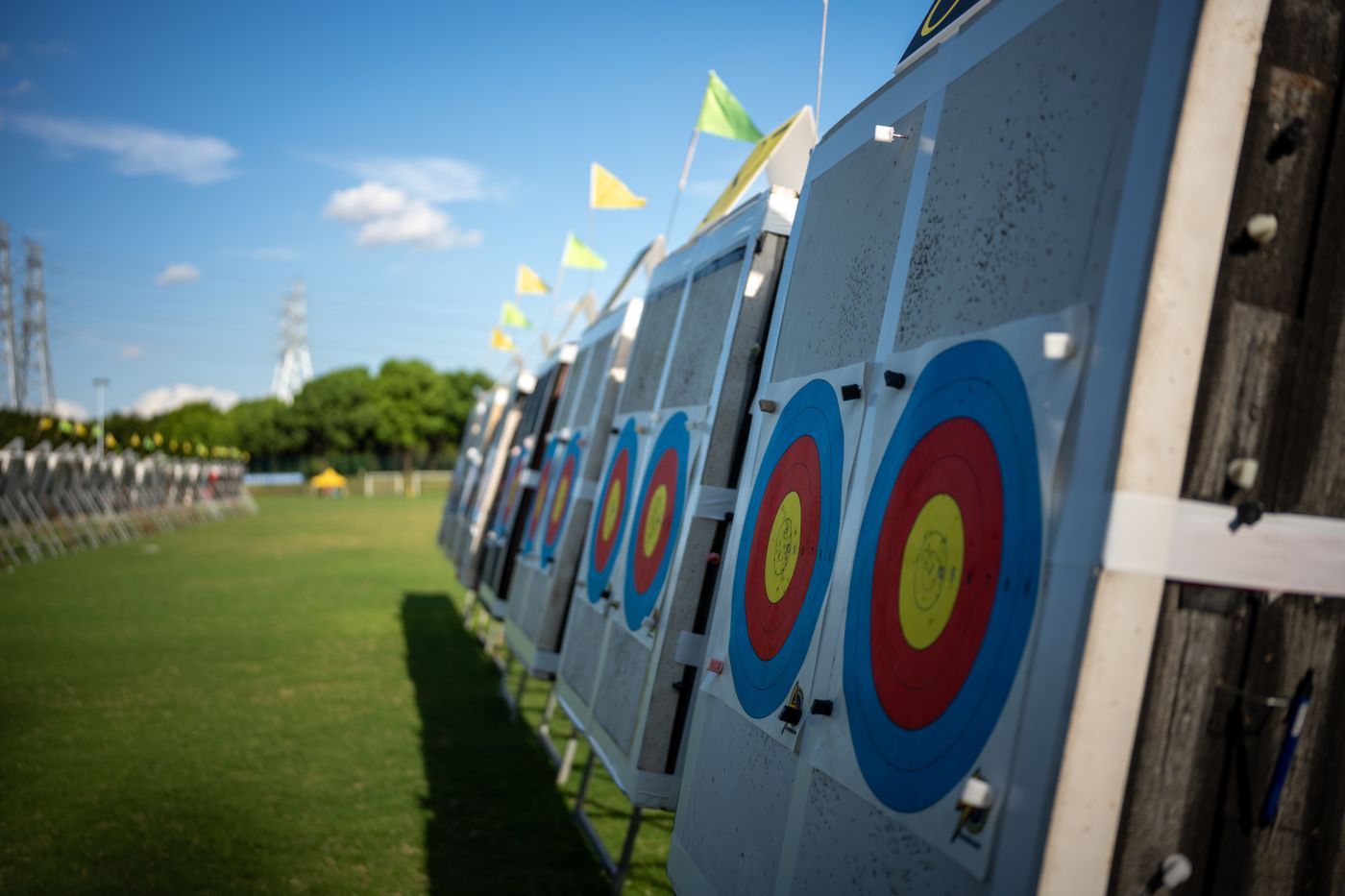
The target never gets smaller. Your group gets bigger.
The Group
Every archery shop lists faces and distances as a column of numbers, and nobody outside the sport can read what any of them mean. So here it is drawn instead: the real ring geometry, at the face size you pick, with a group plotted from one number — how tight you are, in your own hands. The score underneath is measured off the drawing, not written into it.
The face — and where it lands
Nothing here is a claim about equipment. The one thing you set is your angle — how consistently you let the string go — and everything else follows from geometry: a fixed angle opens into a wider circle the further out you stand, at one millimetre per metre per milliradian. The arrows are laid out from a fixed sequence so the same settings always draw the same group, and the score is read back off the plotted radii against the real ring spacing rather than typed in.
The Ground
Ashnock is a shop with a field behind it, and most of what actually happens here happens on the field. The same five sessions The Week runs on, now laid out on the ground itself: the shooting line on the left, the butts standing at the distance each session shoots. The same geometry as The Group, seen from above instead of from behind the string — and picking one here walks The Week at the top of the page to it.
The ground — plan, shooting line to butts
—
—
Every butt on the plan is drawn at the size it actually appears from the shooting line, through the same angular model The Group uses — so the furthest one is small because it is far away, not because it was drawn small. The curve over it is the shape of the shot: for a given loose, the height of the arc grows with the square of the distance, which is why the sight moves so much further between fifty and seventy than it does between eighteen and thirty. What you need before a session is written as time on the line rather than as a card in your wallet, because that is what the person running it is actually asking you.
The store, by ring
The four departments take the four colours off the face, read from the centre outward. Changing department does not load a page — the mark moves out to that ring and the shot goes past you.